Chase Rush
Casual Games
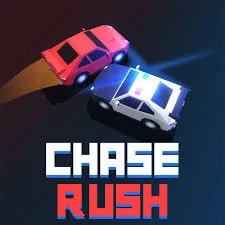
Chase Rush






| Developer | AZ Games |
| Released | 2025-01-01 |
| Platform | Desktop, Mobile, Tablet |
| Technology | HTML5 |
| Category | Casual Games |
Call it what it is: a survival game, not a racing game
Chase Rush looks like a racer — cars, highways, speed — but it's not. You're not trying to finish first. You're trying not to die. The speed is just the clock; the traffic is the obstacle course. Reframe it that way and the game makes sense. Keep thinking "race" and you'll play it wrong and blame the controls.
What you're really doing
You steer left and right through lanes of traffic, weaving between cars and trucks that get denser and faster the longer you stay alive. There are boosts to grab, and the boost window is where the game breathes — a couple of seconds where you stop dodging and just plow. Outside of boost, every second is a tiny lane-change decision made under pressure.
The skill isn't turning. It's reading three cars ahead and committing to a gap before the gap closes. Hesitate and you eat the car in front of you.
Boost discipline
The easiest way to die is to waste a boost on an open stretch of road because it felt good. Don't. Boosts are your escape hatch for when traffic walls up and there's no lane left. If you fire one off for fun and then hit a wall thirty seconds later with nothing in the tank, that's on you. Treat boost like a panic button, not a toy, and your runs double in length.
The difficulty lie
The game scales difficulty with how long you've survived, which sounds fair until you realize it means your best runs are also your hardest. The further you go, the less reaction time you get and the denser the traffic becomes — so the moment you're finally in a groove is the moment the game starts trying hardest to kill you. A run that feels easy at the two-minute mark is lying to you. Stay sharp.
What kills new players
- Staring at their own car instead of the road ahead. Your eyes belong three cars up, always.
- Panic-swerving. Two quick lane changes in a row usually ends in the second car you didn't see.
- Boosting on the open road and then dying in the next cluster with nothing left.
Who it's for
Endless-driving fans, people who liked the old traffic-dodger mobile games, and anyone who wants a "one more run" loop that respects their time. If you want tracks, laps, and a finish line, this isn't it — there's no finish line, only the crash. Pair it with Subway Moto or Police Drive if you want more in this lane.
The first few runs
Your first handful of runs will end fast and feel unfair, and that's because you're reacting to the car in front of you instead of reading the road. That's normal — the skill is reading ahead, and reading ahead only comes with time. Each short run is teaching your brain where to look. Somewhere around run five or six it clicks: you stop seeing individual cars and start seeing lanes and gaps, and your steering becomes anticipation instead of panic. That's the moment Chase Rush gets good.
Early on it punishes you for things you couldn't have seen coming, and that reads as cheap. Fair complaint for the first twenty runs. Then the shapes start repeating — the same squeeze, the same fake-out, the same gap that closes a beat faster than you'd expect — and your hands start solving them instead of flinching at them. A dodger only feels honest once the patterns live in your fingers, and Chase Rush front-loads the dishonest part to put them there. Get through that stretch and the deaths stop feeling random.
Quick questions
Is there an end? No finish line. Your run ends when you crash. The score is how long you lasted.
Different vehicles? There's variety in what you can drive if you stick with it, but the core loop is the same — don't crash.
Keyboard or swipe? Either. Arrow keys or swipe both work.
Does it save my best score? Expect a score chase, not a campaign. Each session is its own thing.
You May Also Like
Discuss Chase Rush
0 commentsLoading comments...