Ragdoll Playground
Sandbox Games

Ragdoll Playground













| Developer | AZ Games |
| Released | 2025-09-12 |
| Platform | Desktop, Mobile, Tablet |
| Technology | HTML5 |
| Category | Sandbox Games |
Some games hand you a goal and a health bar. Ragdoll Playground hands you a physics engine, a toolbox full of questionable items, and then wanders off. What you do with it is the whole game.
What Is Ragdoll Playground?
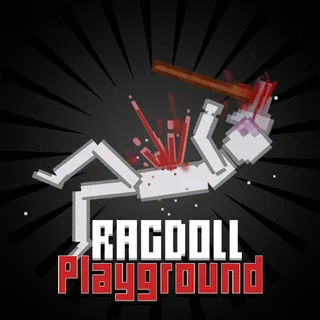
It's a physics sandbox with no score, no timer, and no winning. You drag in ragdoll characters, weapons, vehicles, ramps, explosives, traps — then you poke things and watch the physics do its thing. Mostly the physics does something funny, or catastrophic, or both.
If you've ever messed with this kind of game, you already know the hook. It's a digital toy box. You build a dumb contraption, hit go, laugh when it instantly collapses in a way you didn't see coming, rebuild it slightly less dumb, repeat. The fun isn't finishing. The fun is the part where everything goes sideways.
The formula has a family tree: sandbox toys like this grew out of the "spawn things, break things, see what happens" tradition, and Ragdoll Playground is the browser-native, no-download version of it. You don't install anything, you don't make an account, and nothing asks you to come back daily. You show up, break physics for twenty minutes, and leave. That's the entire contract, and it's a good one.
How to Play
Spawn stuff in
There's a menu of things — ragdolls, crates, planks, weapons, vehicles, hazards. Pick one, drop it into the world. That's the loop. You're not working toward anything, you're stocking a scene.
Equip and poke
Most of the tools come down to applying force or triggering a reaction. Give a ragdoll a weapon and its weight and swing change. Set off an explosive next to a stack of crates. Roll a vehicle down a ramp into a wall. You're finding out what happens, not solving anything.
There's no wrong move
Genuinely. No fail state, no game over. If your masterpiece immediately self-destructs, congrats, that was the content. Hit reset, try a worse idea.
The reset is the workflow
Nothing here is precious. The moment a setup has taught you what it had to teach — the tower fell, the car flew, the ragdoll bounced — reset and reuse the parts for the next idea. Players who treat each scene as a rough sketch get ten times more experiments per session than players who try to curate one perfect diorama.
The Toolbox, Item by Item
Knowing what each item class is for is the difference between random flailing and setups that pay off.
Ragdolls
The stars. They're the bodies everything else happens to — weight, limbs, and a full set of joints that react honestly to whatever you do. Equip one with a weapon and the load changes how it moves and falls. Stack them, launch them, armor them, or just put one on a trampoline and see how physics negotiates. Every other item in the box exists to do something to a ragdoll.
Crates, planks, and ramps
The structural kit. Crates stack, planks span, ramps launch. This is your construction set: bridges, towers, channels, wedges, crash barriers. The classic mistake is building only stable things — the good setups are stable things with one destabilizer deliberately added. A crate tower is scenery. A crate tower with a ramp aimed at it is an event.
Vehicles
Rolling mass with an engine. Vehicles bring momentum that nothing else in the box can match — run one down a ramp into a structure and the physics actually behaves like a car crash, because structurally, it is one. They're also the fastest way to move a ragdoll somewhere it did not consent to go.
Weapons
Handheld force. Giving a ragdoll a weapon changes its weight and reach, which changes every fall and swing it takes afterward. In sandbox terms a weapon isn't for fighting — it's a lever, a counterweight, and a chaos multiplier all in one.
Explosives and hazards
The finishers. Explosives convert a careful arrangement into an unplanned one instantly; spikes, traps, and the rest of the hazard family are where things end up. The craft is placement: an explosive in open air is a firework, the same explosive at the base of a load-bearing crate is a demolition plan.
Trampolines and bouncers
The comedy engine. Nothing in the box produces a less predictable outcome than a ragdoll meeting a trampoline at speed. They're also genuinely useful — a bounce pad at the end of a ramp turns a crash into a flight, and whether that flight ends well is exactly the kind of question this game exists to answer.
Five Setups to Try First
If you spawn in and don't know where to start, these five have the highest laugh-per-minute ratio in the box:
- The demolition run. Stack crates into a tower, lean a plank against it, roll a vehicle down a ramp and into the plank. Physics does the rest. Tune the ramp angle until the collapse pattern changes — that tuning is the game.
- The trampoline range. One trampoline, one ragdoll, one ramp aimed at the trampoline. Measure bounce distance by crash site. Add a second trampoline at the landing spot and regret it.
- The armed domino. Line ragdolls up like dominoes, equip each with a weapon, then shove the first one. Weapons as levers + jointed bodies + chain contact = a Rube Goldberg machine made of limbs.
- The bridge test. Span a gap with planks, load the bridge with crates one at a time, and find where it fails. Then replace the failing plank with a vehicle and find out that a car is not a beam.
- The chain reaction. Explosive shoves a crate, crate knocks a plank, plank drops a ragdoll onto spikes. Getting one of these to actually fire in order is way harder — and way funnier — than it sounds. Start with two links, not four.
Four Beginner Mistakes (All of Them Mine)
Building only stable things. A scene where nothing can go wrong is a screensaver. Every good sandbox setup is a stable arrangement plus one deliberate threat to the stability — the demolition run above is the template.
Cleaning up mid-experiment. The instinct when a structure half-collapses is to fix it immediately. Don't. The half-collapsed state is usually more interesting than the plan: ride the accident, add something to it, and see where the wreckage goes. You can always reset after.
Ignoring weight. Ragdolls, crates, vehicles, and weapons all have mass, and the engine is honest about it. Stack a heavy vehicle on two crates and the result is not "the same as crates" — it's a lesson in load-bearing. Players who think in weight build setups that work twice as often.
Playing it like a level. Hunting for "progress" in a sandbox is a fast way to enjoy it less. There's nothing to unlock, no counter going up, no completion screen. The reward is the crash itself. If that sounds thin, watch one trampoline-range session and reconsider.
Who It's For (and Who It Isn't)
For: people who liked building things and then knocking them down, fans of physics comedy, anyone who wants a five-minute-or-an-hour game with zero pressure, and players who enjoy setting their own goals. It's also a surprisingly good background game — half-attention experimentation works fine.
Not for: players who need objectives, scores, or progression to enjoy themselves. There's genuinely nothing to win here, and no amount of play unlocks a purpose. If that reads as a flaw rather than a feature, the stickman brawler direction is a better use of the same physics engine.
Ragdoll Playground vs Melon Playground
This site has two sandboxes in the same family, and people ask which one to open. Melon Playground runs the same formula — spawn, poke, physics — with its melon-character lab kit: the 2D side-view styling and its own item set that leans darker and more "experiment room." Ragdoll Playground is the straight version: full toolbox, ragdolls front and center, vehicles and structures in the box.
Honest recommendation: they're both free and both open in a browser tab, so the comparison costs you thirty seconds. If you want the meme-famous melon lab, open Melon. If you want cars, ramps, and crate towers, open this one. Plenty of people keep both tabs open and drift between them.
Why It's Weirdly Hard to Quit
"No goal" sounds boring until you realize goals are what make other games end. This one never does. You can spend half an hour tuning a ramp-to-wall-to-explosion chain reaction for an audience of nobody, and that's a fine way to kill a lunch break.
It's also more creative than it gets credit for. Same physics, same props, every player gets a different game because you bring the rules. Some people build. Some people demolish. Some people just want to know how far a ragdoll bounces off a trampoline. All valid.
Tips, Such as They Are
Build first, break on purpose
The satisfying setups are stable things with one thing introduced to ruin them. A tower of crates is fine. A tower of crates with a ramp aimed at it and a car at the top of the ramp is a core memory.
Chase chain reactions
The real depth is making one event set off the next — and the setups section above is where to start. The rule that carries: start with two links, not four. Chain reactions that work are built, not improvised.
One variable at a time
When a setup flops, change exactly one thing — the ramp angle, the crate count, the explosive's position — and rerun it. Changing three things teaches you nothing about which one mattered; changing one turns every crash into a data point.
Reset freely, no guilt
Half of everything you build will flop instantly. That's the format. Reset is right there. Don't waste five minutes rescuing a bit that was dead on arrival.
FAQ
So what's the actual goal?
There isn't one. That is the goal. You make your own fun with the physics and the props. If you need a win condition to enjoy a game, this one will lose you fast — and that's okay.
Is it free?
Yeah, plays free in the browser, no download, no sign-up.
Is this like People's Playground on Steam?
Same genre of fun, different product. People's Playground is the heavier Steam lab with a much darker toolkit; this is the light, free, instantly-in-your-browser take on the same "spawn things and see what physics does" idea. If you've played it, you'll recognize the loop here in ten seconds.
Is this like those other sandbox games?
Same family, same idea — Melon Playground and the rest. Spawn stuff, apply physics, watch it go sideways. If you've played any of them, you'll know exactly what you're looking at within ten seconds. If you would rather have a weapon in hand than a toy box, the stickman brawler on this site is the opposite end of the same physics engine.
Does it work on phones?
Yes — it runs in the browser on desktop, mobile, and tablet.
Can I play it at school or at work?
There's nothing to block: no download, no install, no account — the game loads in the page itself, the way any normal website does. If your network lets you open regular sites, it plays. The same rule covers every game here; our unblocked guide explains exactly how it works.
Is it kid-friendly?
Cartoon physics, no pressure, no score, easy to mess with. Younger players tend to either love the freedom or get bored without something to beat. Both are fair.
You May Also Like

Discuss Ragdoll Playground
0 commentsLoading comments...