
Perfect Orbit
Casual Games


Perfect Orbit



























| Developer | AZ Games |
| Released | 2025-01-01 |
| Platform | Desktop, Mobile, Tablet |
| Technology | HTML5 |
| Category | Casual Games |
The pitch, and what makes it different
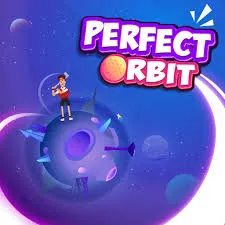
Perfect Orbit is a precision game about launching objects into stable orbits around planets. You set the angle, you set the power, you let go, and you watch whether your read was right — stable orbit, crash into the planet, or fling off into the void. It's the same kind of judgment game as archery or golf: no time pressure, all read, and the satisfaction lives in watching a well-planned shot do exactly what you intended.
If you want something slow and thinky rather than reflexy, this is a different category from most of the site.
No time pressure is the point
The first thing to understand is that nothing is rushing you. You can sit and stare at a level for as long as you want before you launch. The challenge isn't speed; it's getting the read right. That makes Perfect Orbit either meditative or boring depending on your brain — if you like sitting with a problem until you've solved it in your head, it's great. If you need action, the stillness will grate. Go in knowing which one you are.
Reading gravity
Every launch is a small physics problem. The planet pulls your object toward it; your launch gives the object a direction and speed. Too slow and gravity wins and you crash. Too fast and you escape into space. Just right and the speed balances the pull and you orbit. The skill is developing a feel for where "just right" is on each launch — how much power for how much angle for how much gravity — and that feel only comes from launching and watching and adjusting.
Power versus angle
Both matter, but power is the trickier one because small changes in power produce noticeably different results. A touch too much and you escape; a touch too little and you drop. Angle mistakes are more forgiving early but matter more for the trickier orbits. The discipline is changing one variable at a time — fix the angle, dial in the power, then refine — so each attempt teaches you something instead of confusing two variables at once.
The satisfaction
When a read lands and the object settles into a clean orbit, it's a quiet, earned payoff that reflex games can't really give you. You planned it, you executed the plan, and the physics agreed. Players who like that kind of vindication — the same hit as sinking a long putt — will find Perfect Orbit quietly addictive in a way that has nothing to do with adrenaline.
How it compares
It's the precision-judgment cousin of Bow Battle (archery physics) — same "read the physics, commit, watch it play out" loop, just in space with gravity instead of wind. Pick it when you want a calm, thinky precision game with no time pressure.
The first few launches
Your first launches will mostly fail, and that's the game teaching you its gravity feel — something you can't learn except by launching and watching. Too fast, the object escapes. Too slow, it crashes. The window for a stable orbit is surprisingly narrow, and finding it is a matter of dialing in your power and angle through repeated attempts, each one narrowing the search.
The discipline that speeds this up: change one variable per attempt. Fix the angle and sweep the power, or fix the power and sweep the angle — don't wiggle both, or each failure teaches you nothing because you can't tell which change hurt. Players who experiment methodically calibrate fast; players who launch hopefully and adjust randomly take forever and blame the physics. The physics are consistent; the method is what varies.
Quick questions
Do I need to know physics? No — you develop a feel for it by playing. The game teaches the concepts through doing, not theory.
Is it relaxing? For the right player, yes — no time pressure, methodical pace. For action-seekers, it'll feel slow.
Is there a time limit? No. Take as long as you want to plan each launch. The pressure is your own read, not a clock.
Free and in-browser? Yes — no install, plays in the browser.
You May Also Like




Discuss Perfect Orbit
0 commentsLoading comments...