Rocket Fortress
Casual Games

Rocket Fortress














| Developer | AZ Games |
| Released | 2025-01-01 |
| Platform | Desktop, Mobile, Tablet |
| Technology | HTML5 |
| Category | Casual Games |
The pitch
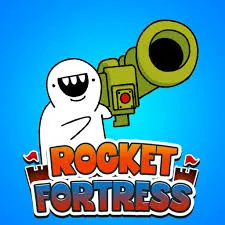
Rocket Fortress is a space tower-defense game — you build and upgrade a rocket fortress, you place defensive modules, and you fend off waves of alien attackers by launching rockets and managing your layout. It's the tower-defense loop (build, defend, upgrade, survive escalating waves) with a space-station skin. If you like tower defense, this is a tidy browser version of it.
The tower-defense core
The loop is the genre classic: enemies arrive in waves, your defenses deal with them, you earn resources from kills, you spend resources on more or better defenses, the next wave is harder. Repeat until you can't hold. The skill isn't reaction — it's planning and economy management. Where do you place modules, what do you upgrade, when do you save versus spend? Those decisions are the whole game, and they're the same satisfying decisions that have carried tower defense for years.
Placement matters
Where you put your modules changes everything, because of range and coverage. Cluster them wrong and enemies slip through gaps in your coverage; spread them too thin and no single area has enough firepower. The smart play is to think about lanes — where do enemies approach from, and how do I cover those approaches with overlapping fields of fire? A well-placed set of modules covers each other; a poorly-placed set has blind spots the waves eventually find.
Build versus upgrade
The eternal tower-defense tension: spend on a new module to add coverage, or upgrade an existing one for more firepower? Early on, coverage usually wins — more modules hitting more enemies. Later, upgrades win, because the waves get dense enough that raw firepower per module matters more than having many weak ones. Reading where you are in that curve and spending accordingly is the resource-management skill that separates holding wave 20 from dying on wave 8.
Adapt to the waves
Each wave can bring different enemy types, and adapting your layout to what's coming matters. A wave of fast small enemies wants different coverage than a wave of slow tanky ones, and stubbornly sticking to one layout regardless of what's arriving is how you lose. The best players tweak their defenses between waves based on what just hit them and what's likely next.
Honest take
It's a well-built, compact tower-defense game — real placement decisions, real economy management, fair escalating difficulty. If you like the genre, it's a satisfying browser version with a clean space theme. If tower defense isn't your thing, the slower, planning-heavy pace will bore you — there's no action-skill expression here, just decisions. Pick it for the strategy, not for thrills.
How it compares
It's the tower-defense entry on the site. Where Stickman War and Steel Legion are army strategy, Rocket Fortress is the defend-the-base flavor — place defenses, hold the line, upgrade your way through waves.
The first few waves
Expect to get overwhelmed early while you learn which modules cover which approaches, and don't get discouraged — reading the enemy paths and the coverage gaps is a skill that comes from losing. Each failed run teaches you one thing: this approach was uncovered, this module was misplaced, this upgrade came too late.
The first few waves you're dropping defenses wherever there's space and watching them get rolled, and it feels like the game just out-scales you. It does — until you stop thinking about filling slots and start thinking about covering lanes. Two turrets overlapping a chokepoint hold more than four scattered across the map, and once that lands, waves that used to end you start paying for themselves. Rocket Fortress stacks the early losses to teach you geometry; the layout that survives is the one where every placement covers something else.
Quick questions
Action or strategy? Strategy — you place and upgrade defenses and manage an economy. No direct action-skill combat.
What if my fortress gets destroyed? The run ends and you restart, ideally with a better layout. Each loss teaches you which placements work against which enemy types.
Is it deep? Real placement and economy decisions, plus adapting to wave types. More than a reskin, less than a sprawling strategy game.
Free and in-browser? Yes — no install, plays in the browser.
You May Also Like


Discuss Rocket Fortress
0 commentsLoading comments...